Key Takeaways
- Ultrasound is the first-line diagnostic tool with 83–91% sensitivity; MRI is used as an adjunct when ultrasound is inconclusive
- Expert ultrasound interpretation dramatically outperforms non-expert — seek evaluation at a specialized center
- There is no statistically significant difference in overall accuracy between ultrasound and MRI
- 50–67% of PAS cases remain undiagnosed before delivery in population-based studies — early screening saves lives
Overview of Diagnosis
Placenta Accreta Spectrum (PAS) is diagnosed primarily through imaging during pregnancy, most commonly using ultrasound. Early and accurate diagnosis is one of the single most important factors in improving outcomes for both mother and baby.
Prenatal diagnosis of PAS is strongly associated with reduced blood loss, fewer emergency surgeries, lower ICU admissions, and decreased maternal morbidity. Women diagnosed before delivery can be cared for by a specialized multidisciplinary team at a center of excellence — dramatically improving outcomes.
Despite the proven benefits of prenatal detection, FIGO (the International Federation of Gynecology and Obstetrics) reports that 50–67% of PAS cases remain undiagnosed before delivery in general practice settings.1 This highlights a critical gap in screening, particularly for women without the classical risk factors of prior cesarean delivery and placenta previa (a low-lying placenta that covers the cervix).
Ultrasound Diagnosis (Primary Method)
Ultrasound is the first-line diagnostic tool for PAS. It is widely available, non-invasive, and — in experienced hands — highly accurate. Both grayscale (standard black-and-white) and color Doppler (which shows blood flow) imaging are used together.
When Ultrasound Is Done
PAS may first be suspected during the routine 18–20 week anatomy scan, especially in women with known risk factors such as previous cesarean sections or placenta previa. However, the Royal College of Obstetricians and Gynaecologists (RCOG) recommends that women at higher risk undergo a specialist assessment at 24–28 weeks of gestation, when the ultrasound signs of PAS become more apparent and reliable.2
Earlier scans (first trimester) may show suggestive signs — such as a low implantation into a cesarean scar — but definitive diagnosis typically requires second- or third-trimester imaging. However, emerging evidence suggests that first-trimester screening between 11 and 16 weeks can identify PAS with accuracy up to 93%, particularly in women with prior cesarean scars and low implantation.12
Ultrasound Signs and Markers
Radiologists and maternal-fetal medicine specialists look for specific markers that suggest the placenta has invaded beyond its normal boundary. Each marker has different diagnostic accuracy:
| Ultrasound Marker | What It Means (Plain Language) | Sensitivity | Specificity |
|---|---|---|---|
| Loss of retroplacental clear zone | The normal dark space between the placenta and the uterine wall (myometrium) disappears, suggesting the placenta is growing into the wall rather than sitting on top of it. | 78–82% | 88–90% |
| Placental lacunae | Irregular dark pools of blood appear within the placenta, giving it a "moth-eaten" or "Swiss cheese" appearance. These are turbulent blood-filled spaces visible on Doppler. | 78.5% | 80.9% |
| Myometrial thinning | The muscular wall of the uterus (myometrium) becomes dangerously thin, typically less than 1 mm, where the placenta is attached. This suggests the placenta has eroded through most of the wall. | 76.3% | 89% |
| Bladder wall interruption | The normally smooth border between the uterus and bladder becomes irregular or disrupted, suggesting the placenta may be invading through the uterus toward the bladder (percreta). | 45.5% | 97.5% |
| Uterovesical hypervascularity | Excessive, abnormal blood flow is visible between the uterus and bladder on color Doppler imaging. This suggests deep invasion with new abnormal blood vessels (neovascularization). | 51.3% | 99.4% |
Data from: D'Antonio et al., Ultrasound in Obstetrics & Gynecology, 2013; Defined by International Federation of Placenta Accreta Disorders (IF-PAS) standardized descriptors.3
Sensitivity is how well a test catches the disease when it is present (high sensitivity = fewer missed cases). Specificity is how well a test rules out the disease when it is absent (high specificity = fewer false alarms). An ideal test has both numbers close to 100%.
Overall Ultrasound Accuracy
When all markers are evaluated together by an experienced sonographer, ultrasound achieves impressive diagnostic accuracy:
- Pooled sensitivity: 83.3–90.7% (catches 83–91 out of every 100 cases)12
- Pooled specificity: 83.4–97.0% (correctly rules out PAS in 83–97% of unaffected pregnancies)12
Ultrasound Accuracy by PAS Subtype
Ultrasound accuracy varies depending on the depth of placental invasion. A 2023 SAR-ESUR review reported the following figures:12
| PAS Subtype | Sensitivity | Specificity |
|---|---|---|
| Accreta (superficial invasion) | 91% | 97% |
| Increta (into the muscle wall) | 93% | 98% |
| Percreta (through the wall) | 81% | 99% |
Data from: Patel-Lippmann et al., SAR-ESUR Joint Consensus Statement, RadioGraphics 2023.12
Sensitivity & Specificity of Individual Ultrasound Markers
Data synthesized from meta-analyses by D'Antonio et al. (2013) and Defined by IF-PAS standardized descriptors.

Illustration: Simplified diagram for educational purposes only.
Expert vs. Non-Expert Assessment
One of the most striking findings in PAS research is the enormous difference between diagnostic accuracy at specialist centers versus general hospitals:
Diagnostic Accuracy: Expert Centers vs. Referring Hospitals
Data from Cali et al. (2018) and Collins et al. (2019).4
If you have been told your placenta "looks abnormal" or that PAS is suspected, it is extremely important to get a specialist evaluation at a center experienced in PAS. At non-expert centers, more than two-thirds of suspected PAS cases turn out to be false positives. Conversely, expert centers can catch cases that general hospitals miss. A specialist assessment can either provide reassurance or confirm the diagnosis and begin proper planning.
False Positives and False Negatives
No diagnostic test is perfect. Understanding the error rates helps set realistic expectations:
- False positive rate at non-expert centers: 68.5% — This means that among women referred to specialist centers with a suspected PAS diagnosis, roughly 68.5% did not actually have PAS upon expert re-evaluation.4
- False negative rate at expert centers: approximately 2.1% — Even at the best centers, a small number of PAS cases (~2 in 100) are missed on prenatal imaging.5
- Only 17% prenatal diagnosis rate without classical risk factors — The PACCRETA prospective study found that among women who lacked the typical risk factors (prior cesarean section, placenta previa), only 17% were diagnosed before delivery.6
While PAS is most common in women with previous cesarean deliveries and placenta previa, it can occur in women without these risk factors. In these atypical cases, the diagnosis is often missed because clinicians are not actively looking for it. Non-previa PAS (where the placenta is in the upper segment of the uterus rather than covering the cervix) is rarely identified prenatally — only about 3% of upper-segment PAS cases are detected before birth.11 If you have any prior uterine surgery (including myomectomy, D&C, or manual placenta removal), discuss PAS screening with your provider.
Risk Escalation: Prior C-Sections and Placenta Previa
The risk of PAS increases dramatically with the number of prior cesarean deliveries, and escalates even further when placenta previa is also present. A single cesarean delivery triples the risk of PAS in the next pregnancy compared to vaginal birth.1112
| Number of Prior C-Sections | PAS Risk WITHOUT Previa | PAS Risk WITH Previa |
|---|---|---|
| 1 | 0.2% | 3% |
| 2 | 0.3% | 11% |
| 3 | 0.6% | 40% |
| 4 | 2.1% | 61% |
| 5 | 2.3% | 67% |
| 6 | 6.7% | — |
Data from: Jauniaux et al., Nature Reviews Disease Primers 2025; Patel-Lippmann et al., RadioGraphics 2023.1112
If you have placenta previa and even one prior cesarean delivery, your risk of PAS is at least 3% (1 in 33). After two prior C-sections with previa, the risk rises to 11% (about 1 in 9). These are high enough probabilities that specialist imaging should be performed in every such pregnancy. The incidence of PAS in patients with placenta previa is approximately 4% after 1 prior C-section and about 13% after 2.11
2D vs. 3D Ultrasound
Most routine ultrasound assessments use 2D (two-dimensional) imaging, which is the standard of care. However, research has shown that 3D power Doppler ultrasound can improve diagnostic accuracy:
- 3D power Doppler sensitivity: 97%
- 3D power Doppler specificity: 92%
3D imaging provides a volumetric view of the blood supply to the placenta and uterine wall, which can reveal abnormal vessel patterns not visible on 2D imaging. However, 3D ultrasound availability is limited — it requires specialized equipment and significant operator expertise, so it is not routinely used in most hospitals.7
MRI Diagnosis (Adjunct Method)
Magnetic Resonance Imaging (MRI) is a powerful imaging technique that uses magnetic fields (not radiation) to produce detailed images of soft tissues. In the context of PAS, MRI is used as an adjunct (supplementary) tool rather than a first-line screening method.
When MRI Is Recommended
MRI is not necessary in all suspected PAS cases. It is typically recommended in the following situations:
- Inconclusive ultrasound: When ultrasound findings are ambiguous or borderline
- Posterior placenta: When the placenta is located on the back wall of the uterus, which is harder to visualize with ultrasound
- Assessing depth of invasion: Particularly when placenta percreta (invasion through the full uterine wall into adjacent organs) is suspected
- Surgical planning: To map the extent of invasion and involvement of surrounding structures (bladder, ureters, bowel) before surgery
The optimal timing for MRI is between 28 and 32 weeks of gestation. At this stage, there is sufficient contrast between placental tissue and the uterine wall to identify abnormalities clearly.8
MRI Findings in PAS
| MRI Finding | What It Means (Plain Language) | Sensitivity | Key Notes |
|---|---|---|---|
| Intraplacental dark T2 bands | Dark bands or streaks within the placenta on T2-weighted images. These represent fibrin deposits and disrupted tissue architecture — a sign that the placenta's structure is abnormal. | 89.7% | Most sensitive MRI marker |
| Uterine/placental bulge | The uterus bulges outward at the site of placental attachment, suggesting the placenta is pushing through the weakened wall. | Variable | Best positive predictive value (PPV): 85% |
| Loss of retroplacental dark line | The normally visible dark line between the placenta and uterine muscle on MRI disappears, similar to the ultrasound "clear zone" finding. | Variable | Corresponds to loss of clear zone on ultrasound |
| Myometrial thinning/disruption | MRI can precisely measure the thickness of the uterine wall and detect areas where it is very thin or completely breached. | Variable | MRI excels at measuring exact wall thickness |
| Bladder wall interruption | Irregularity or disruption of the bladder wall, suggesting placental tissue has invaded into or through the bladder. | Variable | Important for surgical planning |
| Focal exophytic mass | A mass of placental tissue that protrudes beyond the expected uterine boundary, extending outward into the pelvic cavity. | Variable | Strong indicator of percreta |
| Abnormal vasculature | Dilated, tortuous (twisted) blood vessels in or around the uterus that are not normally present, reflecting the abnormal blood supply feeding invasive placental tissue. | Variable | Best seen with contrast-enhanced MRI |
Data from Familiari et al. (2018) systematic review and meta-analysis.8
MRI Accuracy
When evaluating suspected PAS, MRI demonstrates strong but not perfect diagnostic performance:
- Sensitivity: 86.5–94.4% (catches 87–94 out of 100 true PAS cases)12
- Specificity: 79–86% for overall detection (correctly rules out PAS in 79–86% of unaffected pregnancies)
- Specificity for depth of invasion: 96–98.8% — MRI is particularly strong at distinguishing accreta from increta and percreta12
- AUC (Area Under the Curve): 0.91 — an overall measure of diagnostic performance where 1.0 is perfect and 0.5 is no better than a coin flip
These numbers reflect pooled data from multiple studies. A 2023 SAR-ESUR joint consensus confirmed that MRI's greatest added value is in characterizing the depth of invasion, where its specificity (96–98.8%) exceeds that of ultrasound.12 MRI accuracy depends heavily on the experience of the radiologist reading the images and the quality of the imaging protocol used.8
Ultrasound vs. MRI: Head-to-Head Comparison
One of the most common questions patients and clinicians ask is: "Which is better — ultrasound or MRI?" The evidence provides a nuanced answer.
Ultrasound vs. MRI: Sensitivity & Specificity Comparison
Pooled data from D'Antonio et al. (2013), Familiari et al. (2018), and Defined by IF-PAS consensus.38
| Feature | Ultrasound | MRI |
|---|---|---|
| First-line screening | Yes — standard of care | No — adjunct only |
| Sensitivity | 83.3–90.7% | 86.5–94.4% |
| Specificity (overall) | 83.4–97.0% | 79–86% |
| Specificity for depth of invasion | Good for accreta/increta | 96–98.8%12 |
| Statistical difference | No statistically significant difference overall | |
| Predicting need for hysterectomy | AUC: 0.86 | AUC: 0.93 — may be superior |
| Posterior placenta | Limited visualization | Better imaging capability |
| Depth of invasion | Good for accreta/increta | Superior for percreta assessment |
| Availability | Widely available | Limited; requires specialized protocol |
| Cost | Lower cost | Significantly more expensive |
| Real-time assessment | Yes — can assess in real time | No — static images only |
| Patient comfort | Generally well-tolerated | May be claustrophobic; noisy; longer |
| Added value when combined | MRI adds value in 19% of cases but incorrectly changes diagnosis in 17% | |
Data from Defined by IF-PAS; D'Antonio et al. (2014); Defined by Familiari et al. (2018).89
There is no statistically significant difference between ultrasound and MRI in overall diagnostic accuracy for PAS. However, MRI may be superior for predicting the need for hysterectomy (AUC 0.93 vs. 0.86) and for assessing suspected percreta (the deepest form of invasion). The best approach is typically ultrasound first, with MRI as needed.
When Ultrasound and MRI Disagree
In clinical practice, ultrasound and MRI do not always agree. Understanding what happens when they disagree is critical for making informed decisions about your care.
Research shows that in a meaningful minority of cases, the two imaging methods give conflicting results — one says PAS is present while the other says it is not, or they disagree on the severity of invasion.
What the Evidence Shows
- When ultrasound and MRI gave discordant (disagreeing) results, ultrasound was correct in 62% of disagreements (8 out of 13 cases in one key study).9
- 5 false-negative MRIs (MRI said no PAS, but PAS was actually present) were correctly diagnosed by ultrasound.
- In 5 other cases, MRI correctly identified that the ultrasound result was a false positive (ultrasound said PAS, but it was not actually present).
When Imaging Disagrees: Which Method Was Correct?
Based on data from D'Antonio et al. (2014) analysis of discordant cases.9
If your ultrasound and MRI results disagree, do not panic. This is not uncommon. Here is what you should know:
- If ultrasound shows PAS but MRI does not: The ultrasound may still be correct. MRI misses some cases. Your care team should treat this seriously and plan accordingly.
- If MRI shows PAS but ultrasound does not: This is less common but possible. The MRI finding deserves further evaluation by an expert.
- The best approach: Have both sets of images reviewed by a specialist team experienced in PAS diagnosis. In discordant cases, the more concerning result should generally guide planning — it is safer to prepare for PAS and not need the preparation than to be caught unprepared.
- Ask your doctor to explain which specific findings each imaging method showed and why they are recommending a particular course of action.
Other Diagnostic Methods
Serum Biomarkers (Blood Tests)
Several blood-based markers have been studied as potential diagnostic tools for PAS:
- AFP (Alpha-Fetoprotein): Elevated levels in the second trimester have been associated with PAS, but AFP is elevated in many other conditions, making it a poor standalone test.
- Beta-hCG (Human Chorionic Gonadotropin): Abnormal levels may be seen, but this is neither sensitive nor specific enough for PAS diagnosis.
- PAPP-A (Pregnancy-Associated Plasma Protein A): Low first-trimester levels have been loosely associated with PAS, but the predictive value is too low for clinical use.
Currently, no blood test is reliable enough to diagnose or rule out PAS on its own. Biomarkers may raise suspicion and prompt imaging, but they cannot replace ultrasound or MRI. A 2025 comprehensive review confirmed that newer investigational markers — including cell-free fetal DNA, plasma proteins, circulating trophoblasts, and exosomal microRNA — remain in the research stage and are not yet validated for clinical use.11
Doppler Studies
Color Doppler and power Doppler imaging are not separate tests — they are integral components of ultrasound assessment for PAS. Doppler adds critical information by showing:
- Blood flow patterns within placental lacunae (turbulent flow is a hallmark of PAS)
- Uterovesical hypervascularity (abnormal blood vessels between the uterus and bladder)
- Bridging vessels crossing the uterine-bladder interface
- Overall vascularity patterns that help grade severity
Any comprehensive ultrasound evaluation for PAS should include Doppler assessment as standard practice.
The Diagnostic Journey
Understanding the typical diagnostic pathway can help reduce anxiety and ensure you advocate for thorough evaluation at each step.
Prior cesarean, placenta previa, uterine surgery, advanced maternal age
Standard anatomy scan; sonographer looks for suspicious signs
Placental lacunae, loss of clear zone, or other markers observed
Detailed assessment by an experienced MFM specialist or radiologist
For inconclusive ultrasound, posterior placenta, or suspected percreta
Surgeons, MFM specialists, anesthesiologists, neonatologists, radiologists
Delivery timing, surgical approach, blood bank preparation, NICU readiness
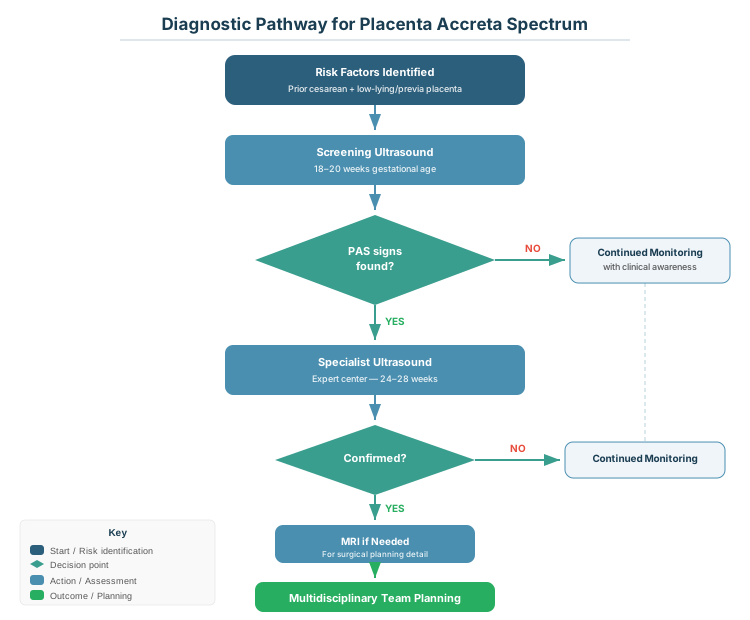
The multidisciplinary team (MDT) approach is the gold standard for managing PAS. This means your care is coordinated by a team that typically includes: a maternal-fetal medicine specialist, an experienced pelvic surgeon (often a gynecologic oncologist), an anesthesiologist with obstetric experience, a neonatologist, interventional radiology, a blood bank/transfusion team, and specialized nursing staff. Studies consistently show that MDT management at experienced centers significantly reduces complications.
What To Do If You Have Just Been Diagnosed
Receiving a PAS diagnosis can be frightening and overwhelming. Here are concrete steps you can take:
Immediate Steps
- Get a specialist evaluation. If your initial diagnosis was at a general hospital, request a referral to a center with PAS experience. Remember that false positive rates can be very high at non-expert centers.
- Ask about MRI. If your diagnosis is based on ultrasound alone and there are any questions about the severity, an MRI can provide additional information, especially about the depth of invasion.
- Seek a center with a dedicated PAS team. Look for hospitals that have a multidisciplinary team and that manage PAS cases regularly (ideally 10 or more cases per year).
- Do not assume the worst. Many suspected PAS cases turn out to be less severe than initially feared, and even confirmed PAS cases have excellent outcomes when managed by experienced teams.
- Gather information. Understanding your diagnosis helps you participate in decision-making. Ask your providers to explain the specific imaging findings and what they mean for your case.
- What specific ultrasound markers were seen, and how confident are you in the diagnosis?
- Do you recommend an MRI, and if not, why not?
- How many PAS cases does your hospital/team manage per year?
- Do you have a multidisciplinary team for PAS, and who is on it?
- What grade/depth of invasion do you suspect (accreta, increta, or percreta)?
- What is the planned delivery timing and approach?
- Is there a possibility of uterine conservation (keeping the uterus), or is hysterectomy likely?
- What blood products will be available during surgery?
- What is the plan for neonatal care given the expected delivery timing?
- Should I get a second opinion at a specialist center?
References
- Jauniaux E, Chantraine F, Silver RM, Langhoff-Roos J; FIGO Placenta Accreta Diagnosis and Management Expert Consensus Panel. FIGO consensus guidelines on placenta accreta spectrum disorders: Epidemiology. Int J Gynecol Obstet. 2018;140(3):265-273. doi:10.1002/ijgo.12407
- Jauniaux E, Alfirevic Z, Bhide AG, et al. Placenta praevia and placenta accreta: diagnosis and management. Royal College of Obstetricians and Gynaecologists Green-top Guideline No. 27a. BJOG. 2019;126(1):e1-e48. doi:10.1111/1471-0528.15306
- D'Antonio F, Iacovella C, Bhide A. Prenatal identification of invasive placentation using ultrasound: systematic review and meta-analysis. Ultrasound Obstet Gynecol. 2013;42(5):509-517. doi:10.1002/uog.13194
- Collins SL, Ashcroft A, Braun T, et al. Proposal for standardized ultrasound descriptors of abnormally invasive placenta (AIP). Ultrasound Obstet Gynecol. 2016;47(3):271-275. doi:10.1002/uog.14952
- Cali G, Giambanco L, Puccio G, Forlani F. Morbidly adherent placenta: evaluation of ultrasound diagnostic criteria and differentiation of placenta accreta from percreta. Ultrasound Obstet Gynecol. 2013;41(4):406-412. doi:10.1002/uog.12385
- Kayem G, Seco A, Beucher G, et al. Clinical profiles and outcomes of placenta accreta spectrum cases: the PACCRETA prospective population-based study. BJOG. 2021;128(10):1646-1655. doi:10.1111/1471-0528.16647
- Shih JC, Palacios Jaraquemada JM, Su YN, et al. Role of three-dimensional power Doppler in the antenatal diagnosis of placenta accreta: comparison with gray-scale and color Doppler techniques. Ultrasound Obstet Gynecol. 2009;33(2):193-203. doi:10.1002/uog.6284
- Familiari A, Liberati M, Lim P, et al. Diagnostic accuracy of magnetic resonance imaging in detecting the severity of abnormal invasive placenta: a systematic review and meta-analysis. Acta Obstet Gynecol Scand. 2018;97(5):507-520. doi:10.1111/aogs.13258
- D'Antonio F, Iacovella C, Palacios-Jaraquemada J, et al. Prenatal identification of invasive placentation using magnetic resonance imaging: systematic review and meta-analysis. Ultrasound Obstet Gynecol. 2014;44(1):8-16. doi:10.1002/uog.13327
- Jauniaux E, Bhide A, Kennedy A, et al. FIGO consensus guidelines on placenta accreta spectrum disorders: Prenatal diagnosis and screening. Int J Gynecol Obstet. 2018;140(3):274-280. doi:10.1002/ijgo.12408
- Jauniaux E, Silver RM, Bhide A, et al. Placenta accreta spectrum. Nat Rev Dis Primers. 2025;11:17. doi:10.1038/s41572-025-00624-3
- Patel-Lippmann K, Engeler CE, Engel H, et al. Placenta accreta spectrum disorder: SAR-ESUR joint consensus statement. RadioGraphics. 2023;43(6):e220090. doi:10.1148/rg.220090