Key Takeaways
- Three main approaches exist: cesarean hysterectomy (standard), conservative management (placenta left in situ), and fertility-preserving surgery
- Planned delivery at 34–36 weeks with a multidisciplinary team dramatically improves outcomes compared to emergency delivery
- Team experience is a more important determinant of outcomes than the depth of placental invasion
- Conservative and fertility-preserving approaches may be options at experienced centers for patients who desire future pregnancies
Introduction
The treatment of Placenta Accreta Spectrum (PAS) is highly individualized. The best approach depends on multiple factors: the severity of placental invasion, the location of the placenta, the patient's goals (particularly regarding future fertility), and the expertise available at the treating center.
There are three main treatment approaches:
- Planned cesarean hysterectomy — the current standard of care per ACOG guidelines
- Conservative management — leaving the placenta in situ to resorb over time
- Fertility-preserving surgery — excising the invaded area and reconstructing the uterus
Regardless of which approach is chosen, the single most critical factor in achieving good outcomes is care by a multidisciplinary team (MDT) at an experienced center. For help finding a specialist center, see our Top Hospitals page.
The Three Management Strategies: Benefits and Risks
A 2025 review in Nature Reviews Disease Primers provides a clear comparison of the three main PAS management strategies, including their benefits, risks, and who they are best suited for.14 Understanding all three options can help you have a more informed conversation with your care team.
| Strategy | How It Works | Benefits | Key Risks |
|---|---|---|---|
| A. Cesarean hysterectomy (Most common worldwide) |
The uterus is removed at the time of cesarean delivery, with the placenta still attached. Requires specialist surgical skills. |
|
|
| B. One-step conservative surgery (Focal resection and repair) |
The abnormal tissue is surgically removed and the uterine wall is reconstructed in a single operation. The surgeon uses intraoperative assessment to determine if the procedure is feasible. |
|
|
| C. Non-surgical conservative (Placenta left in situ) |
The umbilical cord is tied close to the placenta and the placenta is left inside the uterus. Over time (weeks to months), it gradually breaks down and is reabsorbed. |
|
|
According to the 2025 Nature Reviews Disease Primers review, one-step conservative surgery (focal resection and repair) may be feasible when:14
- There is healthy muscle tissue (myometrium) over more than 50% of the lower uterine segment
- There is at least 1–2 cm of healthy tissue between the lower edge of the placenta and the cervix
The surgeon evaluates these criteria during the operation using a topographic classification system. If the criteria are not met, the plan may need to change to a hysterectomy. This is why it is so important that the surgical team is prepared for both scenarios.
A 2021 international survey of 134 PAS centers found that only about 10% offer uterine-sparing treatment.14 However, patient interest in fertility-preserving approaches has grown substantially over the past decade. If this matters to you, it is worth seeking out one of the specialized centers that has published experience with these techniques. See our Fertility Preservation page for a directory of experienced centers.
Outcomes Data Comparison
Choosing between the three PAS management strategies is one of the most consequential decisions patients face. Below, we present published outcome data from large studies and meta-analyses to help you understand the evidence behind each approach. All data is from peer-reviewed sources.
These numbers come from different studies, time periods, and patient populations. Direct comparison between strategies has significant limitations because sicker patients are more likely to receive hysterectomy, while conservative approaches are typically attempted in less severe cases. The one randomized controlled trial (Nieto-Calvache 2024) provides the strongest evidence because patients were randomly assigned to each approach.
| Outcome Measure | Cesarean Hysterectomy | One-Step Conservative Surgery | Placenta Left In Situ |
|---|---|---|---|
| Maternal Mortality |
Meta-analysis: 1.0–2.0% at expert centers20 PACCRETA study: 3 of 148 (2.0%) overall PAS deaths21 Non-expert centers: Up to 7% mortality reported14 |
RCT (Nieto-Calvache): 0 of 30 patients (0%)22 Palacios-Jaraquemada series: 0 deaths in 68 one-step cases23 Note: These are highly experienced single-center results |
Meta-analysis: 0.6% pooled maternal mortality20 PACCRETA: Majority of deaths occurred in this group despite lower severity21 Delayed hemorrhage is the primary risk |
| Estimated Blood Loss |
Meta-analysis median: 2,000–3,000 mL20 Emergency cases: Up to 5,000–12,000 mL Planned at expert center: 1,500–2,500 mL typical |
RCT (Nieto-Calvache): Median 1,300 mL (IQR 700–2,000)22 Palacios-Jaraquemada: Mean 800–1,200 mL23 974 mL less than hysterectomy in meta-analysis20 |
At delivery: Typically low (placenta left undisturbed) Delayed hemorrhage: Unpredictable, may require emergency surgery Cumulative: Chronic low-grade bleeding over weeks to months |
| Transfusion Rate |
Planned cases: 40–60% receive transfusion14 Median units: 4–6 units packed RBC Massive transfusion (≥10 units): 10–20% of cases |
RCT: 30% transfusion rate (vs. 60% for hysterectomy)22 Median units: 2 units when needed Massive transfusion: Rare (<5%) |
At delivery: Lower initial transfusion rate During follow-up: Additional transfusions often needed PACCRETA: 40% required delayed transfusion21 |
| ICU Admission |
Planned at expert center: 20–40%14 Average stay: 1–3 days Emergency cases: >60% ICU admission |
RCT: 13% ICU admission22 Average stay: 1 day if needed Significantly lower than hysterectomy arm |
At delivery: Typically not required Emergency readmission: 15–25% will require readmission for hemorrhage or infection21 |
| Bladder Injury |
Expert centers: 5–15%14 Percreta cases: Up to 25–30% Risk correlates with depth of invasion |
RCT: 3.3% (1 of 30)22 Lower risk because surgery targets the placental area rather than removing the entire uterus |
At delivery: Very low (no pelvic dissection) If emergency hysterectomy needed later: Risk increases significantly due to inflammation and fibrosis |
| Uterus Preserved |
No — the uterus is removed by definition No future pregnancies possible |
RCT: 87% uterine preservation (26 of 30)22 Palacios-Jaraquemada: 91% preservation23 13% required conversion to hysterectomy |
PACCRETA: 78% ultimately retained uterus21 22% required delayed hysterectomy Resorption takes 4–13 months |
| Subsequent Pregnancy |
Not possible Surrogacy or adoption are alternatives for family building |
Published data: Limited but encouraging23 Successful pregnancies reported after one-step surgery >20% PAS recurrence risk in next pregnancy14 |
Sentilhes 2010: 24 of 96 patients (25%) achieved subsequent pregnancy24 Live birth rate: 73% of those who conceived >20% PAS recurrence risk14 |
| Hospital Stay |
Planned: 3–5 days typical Complex/emergency: 7–14+ days Recovery: 6–8 weeks |
RCT: Median 3 days22 Shorter than hysterectomy in most series Recovery: 4–6 weeks |
Initial: 2–4 days Total follow-up: 4–13 months of monitoring Readmission risk: 15–25%21 |
| Infection Risk |
PACCRETA: 0% endometritis21 Meta-analysis: Significantly lower infection rates with hysterectomy25 Lower risk because the placenta — the potential source of infection — is removed |
Limited data on infection rates specifically for one-step surgery Risk expected to be between hysterectomy and in-situ approaches Placenta is removed, so infection risk is primarily surgical |
PACCRETA: 10.8% endometritis (vs. 0% with hysterectomy)21 Meta-analysis: RR 10.91 (95% CI 1.36–87.59)25 INOSS (France): 30% post-delivery infection rate27 |
| Hospital Readmission |
PACCRETA: 3.4% readmission within 6 months21 One-time surgery with predictable recovery Readmissions typically for wound complications |
Limited data Expected to be low (similar to hysterectomy) One-time surgical recovery |
PACCRETA: 28.9% readmission within 6 months21 Meta-analysis: RR 8.99 (95% CI 4.00–12.21)25 Readmissions for hemorrhage, infection, pain, or need for delayed hysterectomy |
Key Studies Behind This Data
If you are at an expert center with surgeons experienced in conservative approaches, the data suggests one-step conservative surgery may offer less blood loss, fewer complications, and a chance to preserve your uterus — with outcomes that are at least comparable to hysterectomy for maternal safety. However, these results depend heavily on surgical expertise. A planned cesarean hysterectomy at an expert center remains a safe and well-established option, especially when fertility is not a priority or when the anatomy is not favorable for conservative surgery.
The placenta-left-in-situ approach avoids major surgery at delivery but trades it for months of uncertainty and a meaningful risk of emergency complications. Discuss with your team whether you have the support system and proximity to your treatment center that this approach requires.
While the surgical outcome data favors conservative approaches, there are significant tradeoffs that every patient must understand:
- Infection: Leaving the placenta in situ carries an 11-fold higher risk of uterine infection (endometritis) compared to hysterectomy. In the French INOSS data, 30% of conservatively managed percreta patients developed post-delivery infections.2527
- Readmission: Nearly 1 in 3 patients (28.9%) managed conservatively required hospital readmission within 6 months, compared to only 3.4% after hysterectomy. Readmissions are typically for hemorrhage, infection, or the need for delayed hysterectomy.21
- Delayed hysterectomy: 22–25% of patients who attempt conservative management ultimately require a hysterectomy anyway, often weeks later under less controlled circumstances.25
- Months of monitoring: Conservative management requires 4–13 months of follow-up with regular imaging. Patients must remain within reasonable distance of their treatment center, as emergencies can arise. This prolonged uncertainty has a documented psychological toll.21
- Uterine artery embolization: 78% of conservatively managed patients require uterine artery embolization (UAE), an interventional radiology procedure to control bleeding from the retained placenta.25
These tradeoffs apply primarily to the “placenta left in situ” approach. One-step conservative surgery removes the placenta at delivery, so the infection, readmission, and monitoring burdens are significantly lower with that approach.
Global Practice Variation: Same Disease, Different Approaches
One of the most striking findings in PAS research is how dramatically management varies between countries. A 2025 INOSS study compared outcomes for the most severe PAS cases (grade 3/percreta) across the UK, France, and Italy:
| Outcome | UK (n=39) | France (n=51) | Italy (n=34) |
|---|---|---|---|
| Conservative Management Attempted | 38% | 61% | 0% |
| Final Hysterectomy Rate | 69% | 57% | 100% |
| Severe PPH (≥3,000 mL) | 54% | 25% | 12% |
| Median Blood Loss | 3,000 mL | 1,200 mL | 1,500 mL |
| Transfusion ≥4 Units | 67% | 47% | 41% |
| ICU Admission | 80% | 41% | 32% |
| Post-delivery Infection | 0% | 30% | 0% |
| Prenatal Detection Rate | 59% | 88% | 82% |
Source: INOSS Multicountry Study, BMC Pregnancy and Childbirth, 2025.27 Note: Different time periods (UK 2010–2011, France 2013–2015, Italy 2014–2016) limit direct comparison.
The authors concluded that “the management most frequently implemented in each country may be that associated with the lowest maternal morbidity there.” In other words, outcomes depend on institutional expertise and established protocols more than on which approach is chosen. Italy achieved excellent hemorrhage outcomes with universal hysterectomy; France achieved comparable results with a predominantly conservative approach. The UK, which used both approaches without as standardized a protocol, had the highest morbidity.
The key lesson: go where the team has the most experience with their preferred approach, rather than seeking a specific treatment type from a team that rarely performs it.
The Multidisciplinary Team
PAS management requires a coordinated team of specialists working together before, during, and after delivery. The complexity of these cases means that no single surgeon or specialty can manage all aspects alone.
Research consistently shows that the presence of an experienced multidisciplinary team is MORE important than the depth of placental invasion for predicting maternal outcomes. A well-prepared team at a specialized center can manage even severe percreta with dramatically better results than an unprepared team encountering mild accreta.
Standard Care: Planned Cesarean Hysterectomy
What It Is
The current standard of care for PAS — endorsed by ACOG (American College of Obstetricians and Gynecologists) — is a planned cesarean hysterectomy. This is a two-stage procedure performed in a single operation: the baby is delivered via cesarean section, and then the uterus is removed with the placenta still attached. No attempt is made to separate or remove the placenta from the uterine wall, as doing so would cause catastrophic hemorrhage.
Timing
ACOG recommends delivery at 34+0 to 35+6 weeks of gestation for stable patients. Antenatal corticosteroids are administered before delivery to promote fetal lung maturity, since delivery occurs preterm. Earlier delivery may be necessary if the patient experiences recurrent bleeding, preterm labor, or other complications.
Surgical Approach
- Vertical midline skin incision is preferred for optimal surgical exposure
- Fundal or high transverse hysterotomy — the uterus is opened ABOVE the placenta to avoid cutting through it, which would cause massive hemorrhage
- Total or subtotal (supracervical) hysterectomy — removal of the entire uterus (or the uterine body, leaving the cervix) with the placenta in situ. Note: total hysterectomy may increase the risk of pelvic organ prolapse later in life, while supracervical hysterectomy requires ongoing cervical cancer screening14
- Cystoscopy and ureteral stenting may be performed before the procedure to protect the ureters and identify bladder involvement
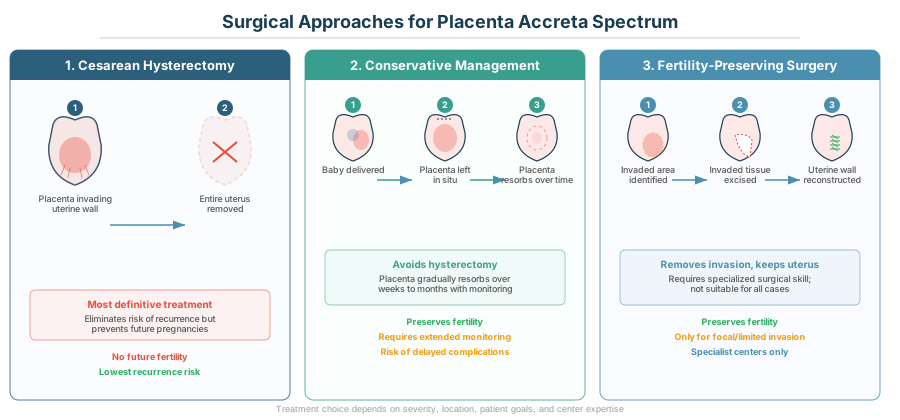
Illustration: Simplified diagram for educational purposes only.
Outcomes Data
| Outcome | Rate |
|---|---|
| Mean blood loss | 2,000–8,000 mL |
| Blood transfusion needed | ~50% |
| ICU admission | Common, especially percreta |
| Bladder injury | ~20% |
| Ureteral injury | 5–7% |
| Severe maternal morbidity | 18x increase vs. uncomplicated cesarean |
| Maternal mortality (expert centers) | 0.05–0.25% |
| Maternal mortality (without prenatal diagnosis) | Up to 30% |
Planned vs. Unplanned Hysterectomy Outcomes
One of the most compelling arguments for prenatal diagnosis and planned surgery is the dramatic difference in outcomes between planned and emergency procedures:
Even with planned surgery at expert centers, cesarean hysterectomy for PAS is a high-morbidity procedure. BUT planned hysterectomy has dramatically better outcomes than emergency or unplanned surgery. This is why prenatal diagnosis and referral to a specialist center is so critical — it transforms an emergency situation into a controlled, team-based operation.
When This Is Recommended
Planned cesarean hysterectomy is the standard of care per ACOG guidelines and is most appropriate when:
- Fertility preservation is not desired or is not a priority
- PAS is severe (deep increta or percreta)
- The center does not have expertise in conservative or fertility-preserving approaches
- The patient and team agree this offers the safest option
Conservative Management (Leaving Placenta In Situ)
Pioneered in France by Prof. Loic Sentilhes and Prof. Gilles Kayem, conservative management is an alternative approach that aims to preserve the uterus by leaving the placenta in place after delivery.
What It Is
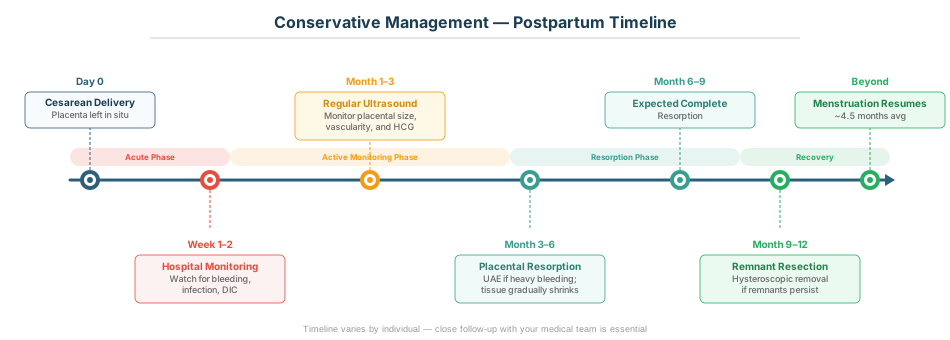
In conservative management, the baby is delivered via cesarean section, the umbilical cord is cut, but the placenta is intentionally left in place. The uterus is closed, and no attempt is made to forcibly remove the placenta. Over time, the placenta gradually loses its blood supply and is resorbed by the body.
How It Works
- Cesarean delivery with placenta left in situ — no forcible attempt at placental removal
- Uterus is closed and the patient is monitored closely
- Serial monitoring with ultrasound and serum beta-hCG levels to track placental resorption
- Optional uterine artery embolization (UAE) may be performed to reduce blood supply to the placenta and accelerate resorption
- Placenta gradually resorbs over weeks to months
- Hysteroscopic resection of any retained placental tissue may follow once the bulk of the placenta has resorbed
Resorption Timeline
PACCRETA Study Data
The landmark PACCRETA prospective population-based study from France provided the best comparative data on conservative management versus hysterectomy:
Success Rates
| Measure | Rate |
|---|---|
| Uterine preservation (overall) | 67–78% |
| Delayed hysterectomy needed | 22–33% |
| Failure rate for accreta | ~7% |
| Failure rate for percreta | ~44% |
Risks Specific to This Approach
- Delayed hemorrhage — can occur weeks to months postpartum, requiring emergency intervention
- Infection / endometritis — significantly higher rate than with hysterectomy
- Sepsis — rare but potentially fatal complication
- Readmission — higher rate of hospital readmission for complications
- Intrauterine synechiae (adhesions) — scar tissue formation inside the uterus that can affect future fertility
A Note on Methotrexate
Methotrexate was previously used by some centers to accelerate placental resorption in conservative management. However, ACOG does not recommend its use: there is no proven benefit, significant risk of toxicity, and at least one maternal death has been attributed to methotrexate use in this context. The 2025 Nature Reviews Disease Primers review likewise does not recommend methotrexate for PAS management.14 It should not be considered part of standard conservative management.
Fertility-Preserving Surgical Techniques
Several specialized surgical techniques have been developed to remove the invasive placenta while preserving the uterus. These approaches require highly specialized surgical expertise and are only available at select centers worldwide.
One-Step Conservative Surgery
Developed by Dr. Jose M. Palacios-Jaraquemada (Argentina)
This technique involves resecting (cutting out) the invaded myometrium along with the adherent placenta, then reconstructing the uterine wall. Unlike leaving the placenta in situ, this approach removes the pathology in a single operation.
Triple-P Procedure
Developed by Prof. Eric Jauniaux and Prof. Basky Thilaganathan (UK)
The Triple-P stands for: Perioperative placental localization, Pelvic devascularization, and Placental non-separation with myometrial excision. This systematic approach has been performed at St George's Hospital, London.
MOSCUS Technique
Tu Du Hospital, Ho Chi Minh City, Vietnam
For detailed information on fertility-preserving approaches, including patient selection criteria, surgical techniques, and outcomes for subsequent pregnancies, see our Fertility Preservation page.
Interventional Radiology Techniques
Interventional radiology (IR) plays an important adjunctive role in PAS management. Several endovascular techniques are used to control hemorrhage during or after surgery:
The 2025 Nature Reviews Disease Primers review notes that vascular balloon occlusion and embolization techniques are not recommended by expert guidelines for routine PAS management. The review cites a lack of quality data supporting their effectiveness and known complications including blood vessel thrombosis (clotting) and leg necrosis (tissue death).14 Some centers still use these techniques selectively, but patients should be aware that the evidence base is limited.
Internal Iliac Artery Balloon Occlusion (IIABO)
Balloons are placed in the internal iliac arteries before surgery and inflated during the procedure to temporarily reduce blood flow to the pelvis. Despite widespread use, the evidence for effectiveness is mixed:
- Meta-analysis: NO proven effect on reducing blood loss compared to surgery without balloons
- Complications: arterial thrombosis, balloon migration, vessel dissection
- Median blood loss with IIABO: ~2,000 mL (not significantly different from without)
Uterine Artery Embolization (UAE)
Small particles or coils are injected into the uterine arteries to block blood flow. UAE can be used before or during surgery, or to manage postpartum hemorrhage. It has shown particular benefit in conservative management:
- With conservative management: hysterectomy rate 15.5% (vs. 76.5% with IIABO)
- Accelerates placental resorption when placenta is left in situ
- Useful for managing delayed postpartum hemorrhage
Multivessel Selective Embolization (MVSE)
- Median blood loss: 713 mL (vs. 2,000 mL for IIABO)
- More targeted and effective than IIABO
- Growing evidence supporting its use
Aortic Balloon Occlusion
- Most effective endovascular technique for hemorrhage control
- Temporary balloon placed in the infrarenal aorta
- Used in some centers, particularly in China
- Requires experienced interventional radiology team
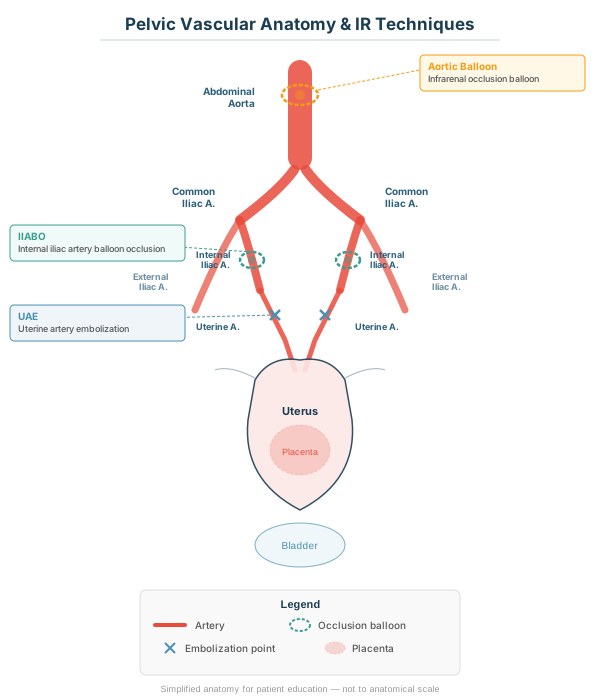
Illustration: Simplified diagram for educational purposes only.
Comparison of IR Techniques
| Technique | Median Blood Loss | Effectiveness | Key Limitations |
|---|---|---|---|
| IIABO | ~2,000 mL | No proven benefit (meta-analysis) | Thrombosis risk, balloon migration, collateral circulation bypasses occlusion |
| UAE | Variable | Effective, especially in conservative management | Not always feasible intraoperatively; delayed effect |
| MVSE | 713 mL | More effective than IIABO | Requires experienced operator; limited availability |
| Aortic Balloon Occlusion | Lowest reported | Most effective endovascular technique | Risk of ischemia; requires close hemodynamic monitoring |
Treatment Decision Flowchart
The decision-making process for PAS treatment involves careful assessment of the disease severity, patient goals, and available expertise. Here is a simplified overview of how treatment decisions are typically made:
Simplified decision guide for educational purposes. Actual clinical decisions involve many additional factors.
Delivery Timing
Choosing when to deliver is one of the most important decisions in PAS management. It requires balancing two competing risks: the risk of maternal hemorrhage (which increases as pregnancy progresses) against the risk of neonatal prematurity (which decreases with each additional week of gestation).
For stable patients with PAS and no active bleeding, ACOG and SMFM recommend planned delivery at 34+0 to 35+6 weeks of gestation, with antenatal corticosteroids administered to promote fetal lung maturity. The 2025 Nature Reviews Disease Primers review similarly recommends delivery at 34–36 weeks, noting that this window balances the risk of maternal hemorrhage (which increases as pregnancy continues) against the risk of complications from neonatal prematurity (which decreases with each additional week).14
Factors Influencing Timing
- Standard timing (34–36 weeks): Stable patients with no bleeding episodes
- Earlier delivery may be needed: Recurrent antepartum bleeding, preterm labor, preterm premature rupture of membranes (PPROM), unstable maternal condition
- Antenatal corticosteroids: Given at least 48 hours before planned delivery if <37 weeks
Initial diagnosis and referral window
Detailed assessment, MDT planning, patient counseling
Regular monitoring; inpatient admission if bleeding
Consider inpatient admission; antenatal corticosteroids if needed
ACOG-recommended delivery window for stable patients
Anaesthesia for PAS Surgery
Anaesthesia for PAS delivery is a specialized area that requires careful planning by an experienced obstetric anaesthesiologist. The 2025 Nature Reviews Disease Primers review notes the following:14
- Both general and regional anaesthesia (such as an epidural or spinal) can be used safely for PAS surgery. There is no single "best" choice for all patients.
- The decision is individualized based on the patient's medical history, the planned surgical approach, and the anaesthesiologist's assessment.
- Difficult airway considerations are important in pregnancy. Pregnancy causes changes to the airway that can make intubation more challenging, so the anaesthesia team should be prepared for this possibility.
- Regardless of the type of anaesthesia chosen, the team should be ready for rapid conversion to general anaesthesia if needed, and massive transfusion protocols should be in place.
Many PAS centers arrange a pre-operative meeting with the obstetric anaesthesiologist before your planned delivery. This is a good time to discuss your preferences, any prior anaesthesia experiences, and what to expect on the day of surgery. If this is not offered to you, ask your care team to arrange it.
What to Expect: A Patient's Journey
Understanding what lies ahead can help reduce anxiety and empower patients and families. While every case is different, here is a typical timeline of what to expect:
PAS suspected or confirmed on ultrasound. Your doctor explains the findings and what they mean.
You are referred to a hospital with a PAS-experienced multidisciplinary team. This is one of the most important steps.
The team reviews your imaging, discusses the best approach, and develops a personalized care plan.
Ongoing ultrasound surveillance, possibly MRI. Monitoring for bleeding or complications.
Many centers recommend inpatient admission in the weeks leading up to planned delivery, especially if you live far from the hospital or have had bleeding.
If delivery is planned before 37 weeks, steroid injections are given to help the baby's lungs mature.
Cesarean delivery by the MDT with full surgical readiness, blood products available, and NICU team present.
Hysterectomy, conservative management, or fertility-preserving procedure — as planned by the MDT.
ICU stay is possible, especially for severe cases. Hospital stay is typically longer than for a standard cesarean.
Regular follow-up appointments. Emotional and psychological support is important during recovery.
Serial ultrasound and beta-hCG monitoring for weeks to months. Hysteroscopic resection may follow.
Physical recovery from major surgery. Processing the emotional impact. Counseling and support groups can be invaluable.
International Guidelines Comparison
The three major international bodies that publish PAS management guidelines — ACOG/SMFM (USA), FIGO (International), and RCOG (UK) — have broadly similar recommendations with some important differences in emphasis:
| Aspect | ACOG / SMFM | FIGO | RCOG |
|---|---|---|---|
| Delivery timing | 34+0 to 35+6 weeks | Similar | Similar |
| Preferred approach | Cesarean hysterectomy | Both hysterectomy and conservative options presented | Evidence-based, individualized |
| Conservative management | "Investigational" — not standard | Accepted in selected cases with appropriate expertise | Considered in selected cases |
| Facility level | Level III or higher | MDT at experienced center | Level 2+ critical care availability |
| Methotrexate | Not recommended | Not recommended | Insufficient evidence |
| MDT required | Yes — strongly recommended | Yes — essential | Yes — mandatory |
Medications & Nutritional Preparation
No medication can cure, reverse, or reduce the severity of PAS during pregnancy. PAS is a structural disorder of abnormal placental invasion. However, several pharmacological and nutritional strategies can significantly improve outcomes by preparing the body for the anticipated surgical delivery.
1. Iron Supplementation — The Most Important Intervention
Iron optimization is the single most evidence-based pharmacological recommendation for PAS during pregnancy. The reason is straightforward: PAS deliveries involve average blood loss of 2,000–5,000 mL. Entering surgery anemic dramatically worsens outcomes.2
- Target hemoglobin (Hgb): >11 g/dL — higher than the standard pregnancy threshold of 10–10.5 g/dL
- Critical threshold: A 2023 study identified a maternal preoperative Hgb of 11.5 g/dL as a critical threshold — below this, the risk of massive hemorrhage increases significantly16
- 2025 study finding: Preoperative IV iron (ferric carboxymaltose 1,000 mg at 34 weeks) positively affected intraoperative bleeding, blood product requirements, peripartum hysterectomy rates, and hospital length of stay15
- Treatment escalation:
- Oral iron supplementation (first-line)
- IV iron (ferric carboxymaltose) if oral iron is insufficient or poorly tolerated
- Erythropoietin-stimulating agents (ESAs) if anemia is severe or refractory
- Safety: IV iron is safe in the second and third trimesters, as confirmed by a large SMFM study17
2. Tranexamic Acid (TXA)
Tranexamic acid (TXA) is an antifibrinolytic medication (it helps blood clots stay stable) that is well established for treating postpartum hemorrhage (the WOMAN trial). Its use specifically for PAS prophylaxis is investigational but promising.18
- One study found IV TXA was associated with substantially lower blood loss in PAS cesarean deliveries (3,116 cc vs. 9,420 cc)18
- The TRAAPREVIA trial is ongoing but excludes high-suspicion PAS patients
- TXA is currently administered at the time of delivery/surgery by the surgical team — it is not something patients take during pregnancy
3. What NOT to Take
Methotrexate: NOT recommended by ACOG, FIGO, or RCOG for PAS.219 Methotrexate is a known teratogen (a substance that causes birth defects) and is absolutely contraindicated during pregnancy. Even when used post-delivery in cases where the placenta is left in situ, the benefit is unproven while serious harms have been documented — including at least one maternal death from methotrexate toxicity. Some older sources may mention methotrexate as a treatment option; current guidelines from all three major bodies explicitly advise against its use.
High-dose folic acid: Standard prenatal doses (400–800 mcg) are fine and recommended. Do not take mega-doses of folic acid for PAS — there is no benefit, and excess folic acid has been linked to increased gestational diabetes risk.
Aspirin for PAS specifically: While low-dose aspirin is used for preeclampsia prevention, PAS involves excessive trophoblast invasion (the opposite of the problem aspirin addresses in preeclampsia). There is no rationale for aspirin to treat PAS itself.
4. Nutritional Preparation
- Iron-rich foods: Red meat, poultry, fish, beans, lentils, spinach, fortified cereals. Pair plant-based iron with vitamin C (citrus, bell peppers) to enhance absorption. Avoid consuming iron-rich foods simultaneously with calcium, tea, or coffee, which inhibit iron absorption.
- Blood-building nutrients: Vitamin B12 (meat, fish, dairy), folate (leafy greens, legumes), copper (shellfish, nuts), and adequate protein all support red blood cell production.
- Vitamin D: Maintain adequate levels (600–4,000 IU/day per standard prenatal recommendations). There is no PAS-specific evidence for higher or lower dosing beyond what is normally recommended.
- Omega-3 fatty acids: General pregnancy benefits include anti-inflammatory effects and may reduce preterm birth risk. No PAS-specific evidence, but reasonable as part of a healthy diet. Aim for 200–300 mg DHA daily.
- No specific dietary restrictions beyond standard pregnancy guidelines: avoid raw fish, unpasteurized dairy, high-mercury fish, excessive caffeine, and alcohol.
The evidence base for dietary interventions specific to PAS is extremely thin. Nearly all dietary recommendations are extrapolated from general pregnancy nutrition. If any source claims a specific diet can treat PAS, that claim is not supported by current evidence. Focus on iron optimization and a balanced, nutrient-dense diet.
References
- Silver RM, Fox KA, Barton JR, et al. Center of excellence for placenta accreta. Am J Obstet Gynecol. 2015;212(5):561-568. doi:10.1016/j.ajog.2014.11.018
- American College of Obstetricians and Gynecologists; Society for Maternal-Fetal Medicine. Obstetric Care Consensus No. 7: Placenta Accreta Spectrum. Obstet Gynecol. 2018;132(6):e259-e275. doi:10.1097/AOG.0000000000002983
- Sentilhes L, Kayem G, Ambroselli C, et al. Fertility and pregnancy outcomes following conservative treatment for placenta accreta. Hum Reprod. 2010;25(11):2803-2810. doi:10.1093/humrep/deq239
- Kayem G, Seco A, Beucher G, et al. Clinical profiles and outcomes of placenta accreta spectrum cases: the PACCRETA prospective population-based study. BJOG. 2021;128(10):1646-1655. doi:10.1111/1471-0528.16647
- Palacios-Jaraquemada JM, Fiorillo A, Hamer J, Martinez M, Bruno C. Placenta accreta spectrum: a hysterectomy can be prevented in almost 80% of cases using a resective-reconstructive technique. J Matern Fetal Neonatal Med. 2022;35(2):275-282. doi:10.1080/14767058.2020.1716715
- Jauniaux E, Hussein AM, Fox KA, Collins SL. New evidence-based diagnostic and management strategies for placenta accreta spectrum disorders. Best Pract Res Clin Obstet Gynaecol. 2019;61:75-88. doi:10.1016/j.bpobgyn.2019.04.006
- Jauniaux E, Chantraine F, Silver RM, Langhoff-Roos J; FIGO Placenta Accreta Diagnosis and Management Expert Consensus Panel. FIGO consensus guidelines on placenta accreta spectrum disorders: Epidemiology. Int J Gynecol Obstet. 2018;140(3):265-273. doi:10.1002/ijgo.12407
- Collins SL, Alemdar B, van Beekhuizen HJ, et al. Evidence-based guidelines for the management of abnormally invasive placenta: recommendations from the International Society for Abnormally Invasive Placenta. Am J Obstet Gynecol. 2019;220(6):511-526. doi:10.1016/j.ajog.2019.02.054
- Nguyen-Xuan HT, Lousquy R, Barranger E, et al. Selective arterial embolization for the treatment of placenta accreta: a retrospective study. Cardiovasc Intervent Radiol. 2019;42(1):73-80. doi:10.1007/s00270-018-2098-7
- Jauniaux E, Alfirevic Z, Bhide AG, et al. Placenta praevia and placenta accreta: diagnosis and management. Royal College of Obstetricians and Gynaecologists Green-top Guideline No. 27a. BJOG. 2019;126(1):e1-e48. doi:10.1111/1471-0528.15306
- Tran TS, Nguyen TH, Le QD, et al. Modified one-step conservative surgery for placenta accreta spectrum: a case series from Tu Du Hospital. Int J Gynecol Obstet. 2023;162(2):514-520. doi:10.1002/ijgo.14776
- Chandraharan E, Rao S, Belli AM, Arulkumaran S. The Triple-P procedure as a conservative surgical alternative to peripartum hysterectomy for placenta percreta. Int J Gynecol Obstet. 2012;117(2):191-194. doi:10.1016/j.ijgo.2011.12.005
- Wright JD, Silver RM, Engstrom JL, et al. Morbidity and mortality of peripartum hysterectomy. Obstet Gynecol. 2013;121(6):1263-1270. doi:10.1097/AOG.0b013e3182908a04
- Jauniaux E, Aplin JD, Fox KA, Afshar Y, Hussein AM, Jones CJP, Burton GJ. Placenta accreta spectrum. Nature Reviews Disease Primers. 2025. doi:10.1038/s41572-025-00624-3
- Preoperative IV Iron in Placenta Accreta Spectrum. BMC Pregnancy Childbirth. 2025. doi:10.1186/s12884-025-07491-6
- Hemoglobin Levels and Hemorrhage Risk in Placenta Accreta Spectrum. 2023. PMC10426315
- Society for Maternal-Fetal Medicine. IV Iron Treatment During Pregnancy: Safe and Effective. SMFM
- Saccone G, et al. Tranexamic Acid Prophylaxis for Placenta Accreta Spectrum. J Clin Med. 2024;13(1):135. doi:10.3390/jcm13010135
- Methotrexate in Placenta Accreta Spectrum: A Narrative Review. 2025. PMC12401312
- Hessami K, et al. Conservative surgery versus hysterectomy for placenta accreta spectrum: a systematic review and meta-analysis. Am J Obstet Gynecol. 2025;232(1):24-36.e8. doi:10.1016/j.ajog.2024.08.029
- Sentilhes L, Seco A, Azria E, et al. Conservative management or cesarean hysterectomy for placenta accreta spectrum: the PACCRETA prospective study. Am J Obstet Gynecol. 2022;226(6):839.e1-839.e18. doi:10.1016/j.ajog.2021.12.015
- Nieto-Calvache AJ, et al. One-step conservative surgery versus cesarean hysterectomy for placenta accreta spectrum: a randomized controlled trial. Am J Obstet Gynecol. 2024;230(4):456.e1-456.e10. doi:10.1016/j.ajog.2023.10.040
- Palacios-Jaraquemada JM. Efficacy of surgical techniques for the treatment of placenta accreta. J Maternal-Fetal Neonatal Med. 2022;35(25):9008-9014. doi:10.1080/14767058.2021.2013802
- Sentilhes L, Ambroselli C, Kayem G, et al. Fertility and pregnancy outcomes following conservative treatment for placenta accreta. Hum Reprod. 2010;25(11):2803-2810. doi:10.1093/humrep/deq239
- Pan S, Han M, Jiang Z, Ge Z. Maternal outcomes of conservative management and cesarean hysterectomy for placenta accreta spectrum disorders: a systematic review and meta-analysis. BMC Pregnancy Childbirth. 2024;24:446. doi:10.1186/s12884-024-06658-x
- Futterman I, et al. Surgical Morbidity following Planned Hysterectomy versus Conservative Management for Placenta Accreta Spectrum: A Systematic Review and Meta-analysis. Am J Perinatol. 2025;42(12):1511-1525. doi:10.1055/a-2491-4328
- Sheridan RM, Kayem G, Svelato A, et al. Management and outcomes of women with placenta accreta spectrum grade 3: an INOSS multicountry multiperiod population-based study. BMC Pregnancy Childbirth. 2025;25:391. doi:10.1186/s12884-025-07271-2