Key Takeaways
- PAS occurs when the placenta grows too deeply into the uterine wall, ranging from mild (accreta) to severe (percreta)
- The primary risk factor is prior cesarean delivery combined with placenta previa — risk increases dramatically with each additional cesarean
- PAS prevalence has increased more than 30-fold since its first description nearly 8 decades ago, driven primarily by rising cesarean rates
- Early diagnosis significantly improves outcomes for both mother and baby
What Is Placenta Accreta Spectrum?
During a normal pregnancy, the placenta (the organ that provides oxygen and nutrients to the baby) attaches to the inner wall of the uterus. After the baby is born, the placenta is designed to detach cleanly and be delivered — this is sometimes called the "afterbirth." The uterine wall has a built-in protective lining called the decidua that acts as a natural boundary, allowing the placenta to separate without difficulty.
In Placenta Accreta Spectrum (PAS), this process goes wrong. The placenta grows too deeply into the uterine wall, anchoring itself in a way that makes it impossible to detach safely after birth. When doctors try to remove it, it can cause life-threatening hemorrhage (severe bleeding).
The word "spectrum" is used because PAS is not a single condition but a range of severity. At the mild end, the placenta attaches a bit too firmly. At the severe end, it can grow completely through the uterine wall and invade neighboring organs like the bladder. The treatment and risks differ significantly depending on where a patient falls on this spectrum.
A Simple Analogy
Think of the placenta like a tree planted in soil. In a normal pregnancy, the tree's roots sit in the topsoil (the decidua) and can be pulled out easily. In PAS, those roots grow deeper — past the topsoil into the rocky subsoil (the muscle layer), and in the worst cases, the roots break through the ground entirely and start spreading into the neighbor's yard (nearby organs).
How Normal Placentation Works
To understand what goes wrong in PAS, it helps to first understand how the placenta is supposed to attach. The uterine wall has three main layers, each with a different role:
- Endometrium / Decidua (innermost layer): The lining of the uterus. During pregnancy, it transforms into a specialized layer called the decidua, which serves as the "landing zone" for the placenta. This is where the placenta is meant to anchor — and no deeper.
- Myometrium (middle layer): The thick muscular wall of the uterus. These muscles are what contract during labor to push the baby out. The placenta should never grow into this layer.
- Serosa / Perimetrium (outermost layer): A thin, smooth membrane that covers the outside of the uterus, separating it from other abdominal organs.
In normal placentation, the placenta sends tiny finger-like projections called chorionic villi (think of them as microscopic roots) into the decidua. The decidua acts as a natural barrier, preventing these villi from burrowing any deeper. When it is time for the placenta to detach after birth, the decidua essentially "lets go" in a clean separation.
Normal Placentation: Cross-Section of the Uterine Wall
Schematic representation. Chorionic villi (purple) remain within the decidua (yellow) and do not penetrate the myometrium (red).
The decidua is the hero of normal placentation. It acts as a protective boundary layer that tells the placenta: "You can anchor here, but go no further." When this layer is damaged or missing — often from prior uterine surgery — the placenta has nothing stopping it from growing too deep. That is the root cause of PAS.
For many years, PAS was described as the placenta "aggressively invading" the uterine wall — sometimes compared to how a cancer spreads. Recent research has overturned this idea. A landmark 2025 review in Nature Reviews Disease Primers (Jauniaux et al.) clarifies that the placenta in PAS is not behaving like a cancer. The placental cells (trophoblast) are actually normal — they are not excessively aggressive.7
Instead, the problem is a "loss of boundary limits." In simple terms:
- A cesarean section scar damages or destroys the decidua (the protective lining) at that spot on the uterus.
- When a placenta later implants over that scar, the normal "stop" signals are missing.
- The scar tissue presents a relatively permissive environment — similar to what happens when a pregnancy implants in the Fallopian tube (ectopic pregnancy). The tissue simply does not have the regulatory mechanisms to limit how far the placenta's roots travel.
- Importantly, research has found that placental villi have never been shown to cross the entire scar and reach the outermost layer (serosa) of the uterus — raising questions about whether the most severe form, "percreta," occurs exactly as classically described.
What this means for patients: If your doctor uses the word "invasion," it does not mean your placenta is behaving like a cancer. It means the normal safety boundary is missing, so the placenta's roots grow deeper than they should. This distinction matters for understanding your condition and for future research into prevention and treatment.
The Three Types of PAS
PAS is classified into three main types based on how deeply the placental tissue (chorionic villi) invades the uterine wall. Think of these as three levels of increasing severity:
Accreta
Grade 1 • ~75% of cases
Attaches to muscle surface
Increta
Grade 2 • ~18% of cases
Invades into muscle
Percreta
Grade 3 • ~7% of cases
Penetrates through wall
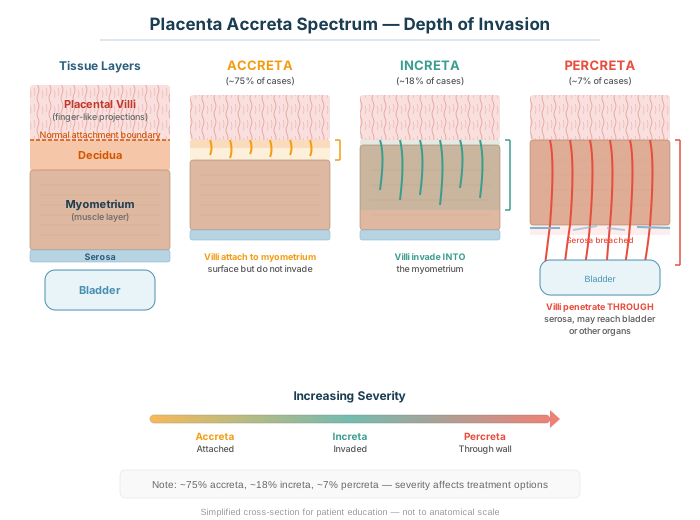
Illustration: Simplified diagram for educational purposes only.
Placenta Accreta (Grade 1)
Placenta Accreta is the mildest and most common form, accounting for approximately 75% of all PAS cases. In this type, the chorionic villi attach directly to the surface of the myometrium (the muscle layer) but do not invade into it. The problem is that the decidua — the protective lining that normally allows clean separation — is missing or defective at the attachment site. Without this boundary, the placenta "sticks" to the muscle but does not burrow into it.
While accreta is the least dangerous form of PAS, it still prevents the placenta from detaching normally after birth and can cause significant hemorrhage if not managed by a specialized team.
Placenta Increta (Grade 2)
Placenta Increta accounts for approximately 18% of PAS cases and represents a more serious level of invasion. Here, the chorionic villi do not just attach to the surface of the myometrium — they actively grow into the muscle tissue itself. The villi penetrate deep into the muscular wall, making the placenta much more difficult (and dangerous) to remove.
Placenta Percreta (Grade 3)
Placenta Percreta is the rarest (~7% of cases) but most dangerous form. The chorionic villi grow all the way through the entire uterine wall, penetrating the serosa (the outer membrane) and potentially invading adjacent organs. The most commonly affected organ is the urinary bladder, due to its proximity to the lower uterus, but the bowel, parametrium (tissue beside the uterus), and other pelvic structures can also be involved.
Percreta is further divided into sub-grades:
- Grade 3a: Villi penetrate to the serosa (outer membrane) only
- Grade 3b: Villi invade the urinary bladder
- Grade 3c: Villi invade other pelvic organs (bowel, pelvic sidewall, etc.)
Comparison of PAS Types: Cross-Section View
Schematic comparison of PAS grades. Purple lines represent chorionic villi; depth of invasion increases from left to right.
The grade of PAS is often not confirmed until surgery or pathological examination of the removed uterus. Imaging (ultrasound, MRI) can suggest the grade, but the definitive diagnosis comes from examining the tissue under a microscope. A patient may be suspected of having accreta but turn out to have increta, or vice versa.
FIGO Classification System
FIGO (the International Federation of Gynecology and Obstetrics, from its French name Fédération Internationale de Gynécologie et d'Obstétrique) is the global authority that sets standards for women's health. In 2019, FIGO published a standardized classification system for PAS to ensure that doctors worldwide use the same terminology and grading.2
Before this system, different hospitals used different names and definitions, making research and communication difficult. The FIGO system organizes PAS into clinical grades based on the depth of villous invasion:
| FIGO Grade | Name | Description | Depth of Invasion |
|---|---|---|---|
| Grade 1 | Placenta Accreta (Adherenta) | Chorionic villi are in direct contact with the myometrium without invading it. The decidua basalis (protective lining) is absent or defective. | Surface of myometrium only |
| Grade 2 | Placenta Increta | Chorionic villi penetrate into the myometrium (muscle layer of the uterus). | Into the myometrium |
| Grade 3a | Percreta — Serosa | Chorionic villi penetrate through the full thickness of the myometrium to the uterine serosa (outer covering). The serosa may appear intact or disrupted. | Through myometrium to serosa |
| Grade 3b | Percreta — Bladder | Chorionic villi invade into the urinary bladder. This occurs most often in the lower uterine segment where the bladder lies directly against the uterus. | Through wall into bladder |
| Grade 3c | Percreta — Other Organs | Chorionic villi invade other pelvic tissues or organs, such as the broad ligament, parametrium, bowel, or pelvic sidewall. | Through wall into other organs |
Having a standardized system allows doctors to: (1) communicate precisely about the severity of a case, (2) compare outcomes across different hospitals and countries, (3) plan surgical approaches based on expected invasion depth, and (4) conduct research studies with consistent definitions. If you are reviewing your medical records, ask your team which FIGO grade your PAS falls under.
Risk Factors
PAS does not occur randomly. Certain factors significantly increase a person's risk, and understanding these can help with early detection and appropriate planning. The single most important risk factor is a history of prior cesarean section (C-section), especially when combined with placenta previa. In fact, more than 90% of PAS cases involve a combination of prior cesarean delivery and a low-lying or previa placenta.7
Prior Cesarean Sections (Primary Risk Factor)
A cesarean section creates a scar on the uterus. Each subsequent C-section adds another scar. These scars damage the decidua (the protective uterine lining), and in future pregnancies, the placenta may implant directly over a scar where the decidua cannot regenerate properly. Without the decidual barrier, the placenta can grow abnormally deep into the muscle.
The risk escalates dramatically with each additional cesarean delivery, particularly when placenta previa (see below) is also present:1
| Number of Prior C-Sections | Risk of PAS (with Placenta Previa) | Relative Increase |
|---|---|---|
| 0 (no prior C-section) | 3% | Baseline |
| 1 prior C-section | 11% | ~4x baseline |
| 2 prior C-sections | 40% | ~13x baseline |
| 3 prior C-sections | 61% | ~20x baseline |
| 4 or more prior C-sections | 67% | ~22x baseline |
Data from Silver et al., 2006; cited in ACOG Obstetric Care Consensus No. 7, 2018.
Risk of PAS by Number of Prior Cesarean Deliveries (with Previa)
A patient with 3 or more prior cesarean deliveries and placenta previa has a greater than 60% chance of having PAS. This is why careful imaging and referral to a specialist center is essential for anyone with multiple prior C-sections.
Placenta Previa
Placenta previa is a condition in which the placenta implants in the lower part of the uterus, partially or completely covering the cervix (the opening to the birth canal). Previa is present in approximately 80% of PAS cases.1
Why does previa increase PAS risk? The lower uterine segment (where previa occurs) is thinner and often the site of prior C-section scars. When the placenta implants over scar tissue in this thin area, the conditions are ideal for abnormally deep invasion. Previa alone is a risk factor, but previa combined with prior C-section scars creates a dramatically elevated risk.
Other Uterine Surgery
Any surgery that creates a scar on the uterus can damage the decidual lining and increase PAS risk. This includes:
- Myomectomy: Surgical removal of uterine fibroids (benign growths). The scars left behind are similar to C-section scars.
- Dilation and Curettage (D&C): A procedure in which the uterine lining is scraped, often performed after miscarriage or for diagnostic purposes. Repeated D&Cs can thin or damage the endometrium.
- Uterine artery embolization, endometrial ablation, and other procedures that alter the uterine lining.
IVF and Assisted Reproduction
In vitro fertilization (IVF) has been identified as an independent risk factor for PAS, meaning it increases risk even in patients without prior uterine surgery.3 The exact mechanism is not fully understood, but hypotheses include:
- The embryo transfer procedure may cause subtle endometrial trauma
- Hormonal manipulation in IVF cycles may affect how the decidua develops
- IVF patients tend to be older and may have undergone prior uterine procedures
Advanced Maternal Age and Multiparity
Advanced maternal age (generally defined as over 35 at the time of delivery) is associated with increased PAS risk. The decidua may become less robust with age, and older patients are more likely to have had prior pregnancies and uterine procedures.
Multiparity (having had multiple prior pregnancies and deliveries) is also a risk factor. Each pregnancy and delivery creates some degree of stress on the uterine lining, and the cumulative effect may predispose to abnormal placentation in subsequent pregnancies.
Endometriosis and Adenomyosis (Emerging Risk Factors)
Recent research has identified endometriosis (a condition where tissue similar to the uterine lining grows outside the uterus) and adenomyosis (a related condition where endometrial tissue grows into the muscular wall of the uterus) as independent risk factors for PAS. The 2025 Nature Reviews Disease Primers review now lists endometriosis and adenomyosis among emerging risk factors for the condition.7
What the evidence shows
- Endometriosis: A meta-analysis found an adjusted odds ratio of 3.39 (95% CI 1.96–5.87) for PAS in women with endometriosis — meaning roughly a 3.4-fold increase in risk9
- Adenomyosis: Studies report an adjusted odds ratio of 3.07 (95% CI 2.01–4.70) per Mandelbaum et al. 2023, and OR 2.26 per Ono et al. 2023 — approximately a 2–3-fold increase1011
- Risk increases with severity: A 2024 study found stage IV (severe) endometriosis in 64% of PAS cases compared to only 34% in non-PAS controls12
Shared pathophysiology: why the connection exists
Both endometriosis/adenomyosis and PAS share underlying biological mechanisms that help explain the association:
- Decidualization defects: Decidualization is the process by which the uterine lining transforms to support pregnancy. Both endometriosis and adenomyosis are characterized by "decidualization resistance," where the lining fails to transform properly — the same defect believed to underlie PAS
- Disrupted endometrial-myometrial interface: Adenomyosis, by definition, involves endometrial tissue breaching the muscle layer, weakening the natural barrier that normally limits how deeply a placenta can attach
- Abnormal MMP expression: Matrix metalloproteinases (MMPs) are enzymes that remodel tissue. Both conditions show dysregulated MMP activity, which may enable excessive trophoblast (early placenta cell) invasion
- Immune microenvironment disruption: Both conditions alter the immune cell balance at the implantation site, potentially reducing the natural checks on placental invasion
The IVF confounding factor
It is important to note that women with endometriosis are more likely to use assisted reproductive technologies (ART) such as IVF, which itself increases PAS risk. ART carries an adjusted OR of 3.54 for PAS, and frozen embryo transfer in hormone replacement cycles has been associated with an OR as high as 11.4.13 The relationship between endometriosis and PAS may therefore be partly mediated through higher ART utilization rather than endometriosis alone.
While the relative risk is elevated (~3-fold), the absolute risk of PAS remains low. Most women with endometriosis will have uncomplicated pregnancies. This information should be discussed with your obstetrician for individualized risk assessment, especially if you have additional risk factors like prior cesarean delivery or placenta previa.
Summary of Risk Factors
| Risk Factor | Impact Level | Notes |
|---|---|---|
| Prior cesarean delivery + previa | Very High | Risk rises steeply with each additional C-section |
| Placenta previa alone | High | Present in ~80% of PAS cases |
| Other uterine surgery (myomectomy, D&C) | Moderate | Any procedure that scars the uterine wall |
| IVF / assisted reproduction | Moderate | Independent risk factor, mechanism not fully understood |
| Endometriosis | Moderate | ~3.4-fold increase; risk rises with severity9 |
| Adenomyosis | Moderate | ~2–3-fold increase1011 |
| Advanced maternal age (>35) | Low–Moderate | Often co-occurs with other risk factors |
| Multiparity (many prior births) | Low–Moderate | Cumulative uterine stress |
Epidemiology: How Common Is It?
Placenta Accreta Spectrum was once considered extremely rare. When it was first described nearly eight decades ago, the estimated incidence was approximately 1 in 30,000 pregnancies. Today, a large meta-analysis of 7,001 confirmed cases from nearly 5.7 million births found a pooled prevalence of 0.17%, or approximately 1 in 588–817 pregnancies — a more than 30-fold increase.167
The Rising Trend
The dramatic increase in PAS parallels the rise in cesarean delivery rates worldwide. In the United States, the cesarean delivery rate rose from about 5% in 1970 to over 32% today. Globally, an estimated 28.5% of all deliveries will be by cesarean section by 2030 (Betran et al. 2021), which means PAS prevalence is expected to continue rising.8 More C-sections mean more uterine scars, which means more opportunities for abnormal placentation in subsequent pregnancies. The 2025 Nature Reviews Disease Primers review identifies reducing unnecessary cesarean sections as the single most efficient preventive measure against PAS.7
PAS Incidence Over Time (Approximate)
Incidence by Country
PAS rates vary by country, influenced by local cesarean section rates, access to diagnostic imaging, and reporting practices:
| Country | Estimated Incidence | C-Section Rate | Notes |
|---|---|---|---|
| United States | 1 in 500 | ~32% | Highest absolute numbers due to population and C-section rates |
| United Kingdom | 1 in 1,500 – 2,500 | ~28% | National registry data (UKOSS); lower rate possibly due to lower C-section rate |
| France | 1 in 2,000 – 3,000 | ~21% | Lower cesarean rates correlate with lower PAS incidence |
| Japan | 1 in 1,700 – 2,500 | ~20% | Increasing trend with rising cesarean rates |
Estimates compiled from multiple sources; exact figures vary by study methodology and time period.
The increase in PAS is almost entirely driven by the rise in cesarean section rates globally. C-section is a life-saving procedure when medically indicated, but each one leaves scar tissue on the uterus. As more people have repeat cesarean deliveries, the population of individuals with uterine scarring grows — and with it, the prevalence of PAS. Other contributing factors include increasing maternal age and greater use of assisted reproduction technologies. Improved diagnostic imaging also means more cases are being detected that might have gone undiagnosed in previous decades. With global C-section rates projected to reach 28.5% of all deliveries by 2030, experts now identify reducing unnecessary cesarean sections as the most efficient way to prevent PAS.78
Key Terms Glossary
Medical literature on PAS uses many specialized terms. Here is a quick-reference guide to the most important ones:
| Term | Definition |
|---|---|
| Chorionic Villi | Tiny finger-like projections from the placenta that anchor it to the uterine wall and facilitate exchange of nutrients and oxygen between mother and baby. Think of them as microscopic "roots." |
| Decidua (Decidua Basalis) | The specialized inner lining of the uterus during pregnancy. It forms the boundary between the placenta and the muscle wall, allowing the placenta to attach without invading too deeply. Damage to or absence of the decidua is the underlying cause of PAS. |
| Myometrium | The thick muscular middle layer of the uterine wall. It provides structural support and contracts during labor. In PAS, placental tissue invades into (increta) or through (percreta) this layer. |
| Serosa (Perimetrium) | The thin outermost membrane covering the uterus. In percreta (Grade 3a+), chorionic villi reach or penetrate this layer. |
| Trophoblast | The outer layer of cells of the developing embryo that forms the placenta. Trophoblast cells are responsible for implanting into the uterine wall. In PAS, trophoblast migration extends beyond normal boundaries — not because the trophoblast is abnormally aggressive, but because the scar tissue lacks the usual regulatory mechanisms that limit how far the trophoblast travels (see paradigm shift below). |
| Placenta Previa | A condition in which the placenta implants in the lower portion of the uterus, covering or partially covering the cervix. Previa significantly increases PAS risk, especially in combination with prior cesarean scars. |
| Multiparity | Having had two or more pregnancies carried to a viable gestational age. Higher parity is associated with increased PAS risk due to cumulative uterine changes. |
| Hemorrhage | Severe, uncontrolled bleeding. PAS is one of the leading causes of life-threatening obstetric hemorrhage, often requiring massive blood transfusion. |
| Cesarean Hysterectomy | A procedure in which the baby is delivered by cesarean section and the uterus is surgically removed at the same time. This is often the definitive treatment for severe PAS. |
| FIGO | The International Federation of Gynecology and Obstetrics — the global body that sets standards and classification systems for obstetric conditions including PAS. |
References
-
American College of Obstetricians and Gynecologists (ACOG) and Society for Maternal-Fetal Medicine. Obstetric Care Consensus No. 7: Placenta Accreta Spectrum. Obstetrics & Gynecology, 132(6), e259–e275, 2018.
acog.org — Obstetric Care Consensus No. 7 -
Jauniaux E, Ayres-de-Campos D, Langhoff-Roos J, Fox KA, Collins S; FIGO Placenta Accreta Diagnosis and Management Expert Consensus Panel. FIGO classification for the clinical diagnosis of placenta accreta spectrum disorders. International Journal of Gynecology & Obstetrics, 146(1):20–24, 2019.
doi.org/10.1002/ijgo.12761 -
Usta IM, Hobeika EM, Abu Musa AA, Gabriel GE, Nassar AH. Placenta previa-accreta: risk factors and complications. American Journal of Obstetrics & Gynecology, 193(3 Pt 2):1045–9, 2005. See also: Gyaneshwar R, et al. StatPearls: Placenta Accreta, updated 2024.
ncbi.nlm.nih.gov — StatPearls: Placenta Accreta -
Silver RM, Landon MB, Rouse DJ, et al. Maternal morbidity associated with multiple repeat cesarean deliveries. Obstetrics & Gynecology, 107(6):1226–1232, 2006.
doi.org/10.1097/01.AOG.0000219750.79480.84 -
Fitzpatrick KE, Sellers S, Spark P, Kurinczuk JJ, Brocklehurst P, Knight M. Incidence and risk factors for placenta accreta/increta/percreta in the UK: a national case-control study. PLoS ONE, 7(12):e52893, 2012.
doi.org/10.1371/journal.pone.0052893 -
Jauniaux E, Bunce C, Grønbeck L, Langhoff-Roos J. Prevalence and main outcomes of placenta accreta spectrum: a systematic review and meta-analysis. American Journal of Obstetrics & Gynecology, 221(3):208–218, 2019.
doi.org/10.1016/j.ajog.2019.01.233 -
Jauniaux E, Aplin JD, Fox KA, Afshar Y, Hussein AM, Jones CJP, Burton GJ. Placenta accreta spectrum. Nature Reviews Disease Primers, 2025.
doi.org/10.1038/s41572-025-00624-3 -
Betran AP, Ye J, Moller AB, Souza JP, Zhang J. Trends and projections of caesarean section rates: global and regional estimates. BMJ Global Health, 6(6):e005671, 2021.
doi.org/10.1136/bmjgh-2021-005671 -
Uccella S, Manzoni E, Cromi A, et al. Endometriosis and placenta accreta spectrum: a systematic review and meta-analysis. Biomedicines, 10(3):616, 2022.
PMC8962380 | doi.org/10.3390/biomedicines10030616 -
Mandelbaum RS, et al. Adenomyosis and risk of placenta accreta spectrum. 2023.
Adjusted OR 3.07 (95% CI 2.01–4.70). -
Ono Y, et al. Association between adenomyosis and placenta accreta spectrum. Journal of Obstetrics and Gynaecology Research (JSOG), 2023.
PMC10422787 -
Fujian study. Endometriosis severity and placenta accreta spectrum: stage IV endometriosis in PAS cases. 2024.
PMC11755302 -
Sabol BA, Engman DM, Engel SM, et al. Assisted reproductive technology and placenta accreta spectrum. F&S Reports, 2023.
ART adjusted OR 3.54; frozen embryo transfer in hormone replacement cycles OR 11.4.